practical
Visiting the Hungarian Parliament
You cannot walk into the Parliament. Entry is by timed guided tour only, tickets sell out days ahead in summer, and EEA citizens pay a fraction of what everyone else pays. Here is how it actually works.
You cannot just walk in
This is the thing visitors get wrong, and it costs them the building. The Hungarian Parliament is a working legislature, not a museum with a turnstile. Entry to the interior is by timed guided tour only, in a fixed language, at a fixed time, with a ticket bought in advance.
The tour runs about 45 minutes. You go through security, you are grouped by language, and you move as a group.
Book earlier than feels necessary
Tickets are sold through the Parliament’s own visitor service and its ticketing partner. In July and August, walking up to the visitor centre on the day and expecting an English tour that afternoon usually does not work.
Book a few days out. In the winter you have more slack, but the tour still fills.
The discount nobody mentions
Citizens of the European Economic Area pay a substantially lower price than everyone else — not a token student reduction, a different tariff. It is not advertised prominently and the ticket page does not hold your hand.
If you hold an EEA passport or ID card, select the EEA ticket and bring the document. It is checked at the door. If you cannot produce it you pay the difference on the spot, which is a sour way to start.
We are not printing the figures here. Ticket prices move, and a number in a blog post from last season is worse than no number at all. Check the official site the week you book.
What you actually see
The tour covers, in order:
- The grand staircase — the photograph everyone has seen, 96 steps, gilding, and a ceiling that is the point of the whole building.
- The Dome Hall, where the Holy Crown of Hungary sits under guard. This is the reason the building exists in its current form. No photography of the Crown.
- One of the two debating chambers — the one not in use. The Parliament was built for a two-house legislature and Hungary now has one, so there is always a spare chamber to show.
What you do not see: the working chamber, the offices, or anything on a sitting day. That is worth understanding before you buy.
The days it closes
The building shuts to visitors when the House is sitting. Sitting days cluster and are published in advance, but they change. Public holidays close it too, and 20 August — St Stephen’s Day — closes the whole square.
If your trip has one flexible day in it, keep the Parliament on that one.
Getting there, and the station
Metro M2 to Kossuth Lajos tér puts you directly under the square. The station itself is worth the two minutes: it has a small underground exhibition and a concrete-and-steel ceiling that is a deliberate piece of design, not a corridor.
The visitor entrance is on the north side of the square, not the river front. Allow fifteen minutes for security before your slot.
Is the interior worth it?
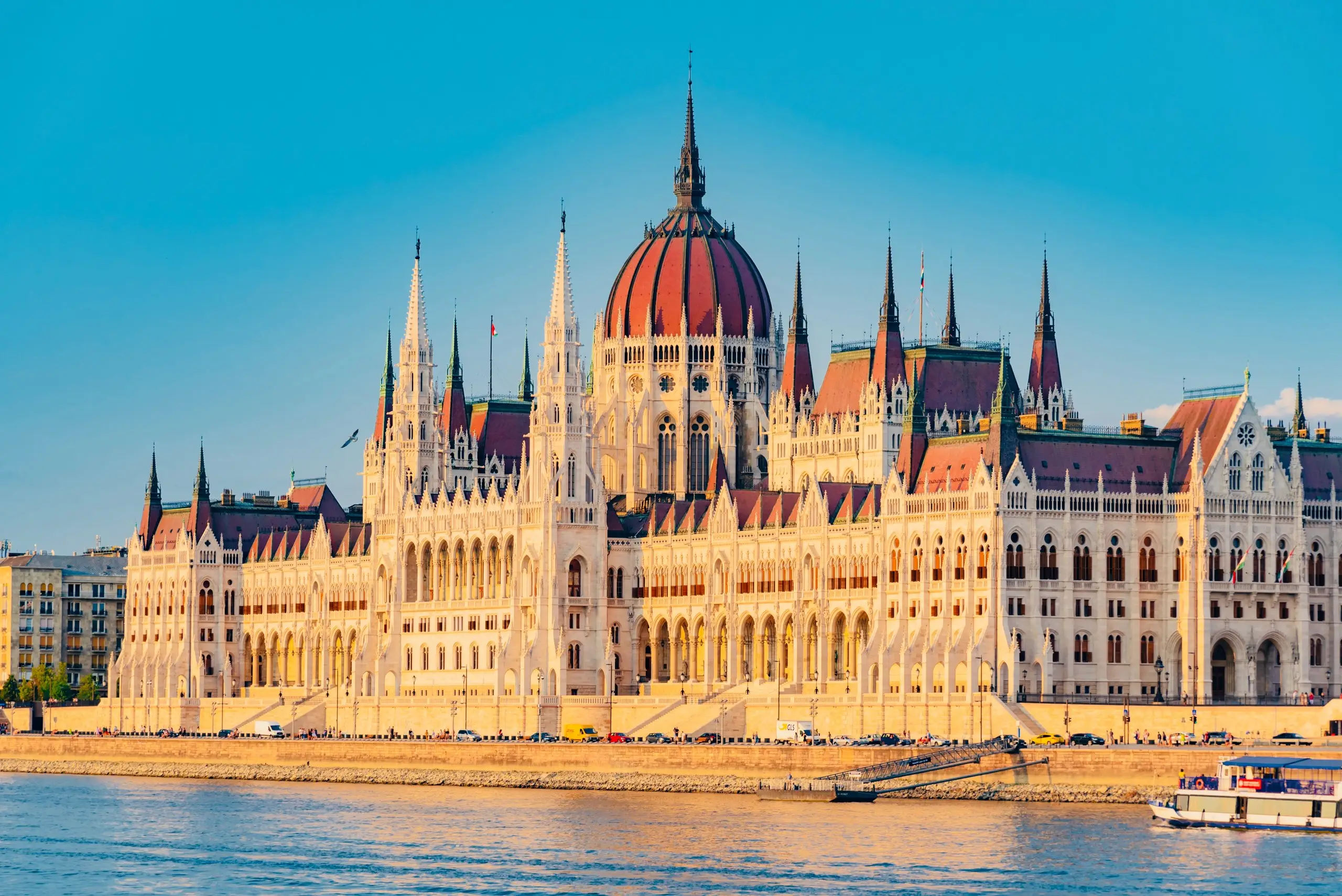
Yes, once, if you book properly. It is the largest building in Hungary, it was finished in 1904 to a design by Imre Steindl, and the interior is more excessive than the outside prepares you for.
But be honest about the alternative. The exterior at night from the Buda bank is the better photograph, it is free, and it takes twenty minutes. If your day is tight, the outside is not a consolation prize.
The square is the other half
Kossuth Lajos tér is where modern Hungarian history happened — 1956 most of all, and there is a memorial to it below ground level on the eastern side that most visitors walk past without noticing.
Our Pest walking tour covers the square, the 1956 memorial and the story behind the building. We do not sell the interior ticket — you buy that yourself, and we will tell you when to book it.
Related tours
Would you rather someone local showed you?
Every tour we run is private, and the price is for the group.