comparison
Which Budapest Thermal Bath Should You Pick?
Budapest has around 120 thermal springs and four baths most visitors choose between. They are genuinely different: one is a palace, one is Ottoman, one is where locals go, and one is on every postcard.
The short answer
- First visit, want the photograph: Széchenyi.
- Want the architecture: Gellért.
- Want something genuinely old and quiet: Rudas.
- Want to be among Hungarians rather than tourists: Lukács.
Széchenyi
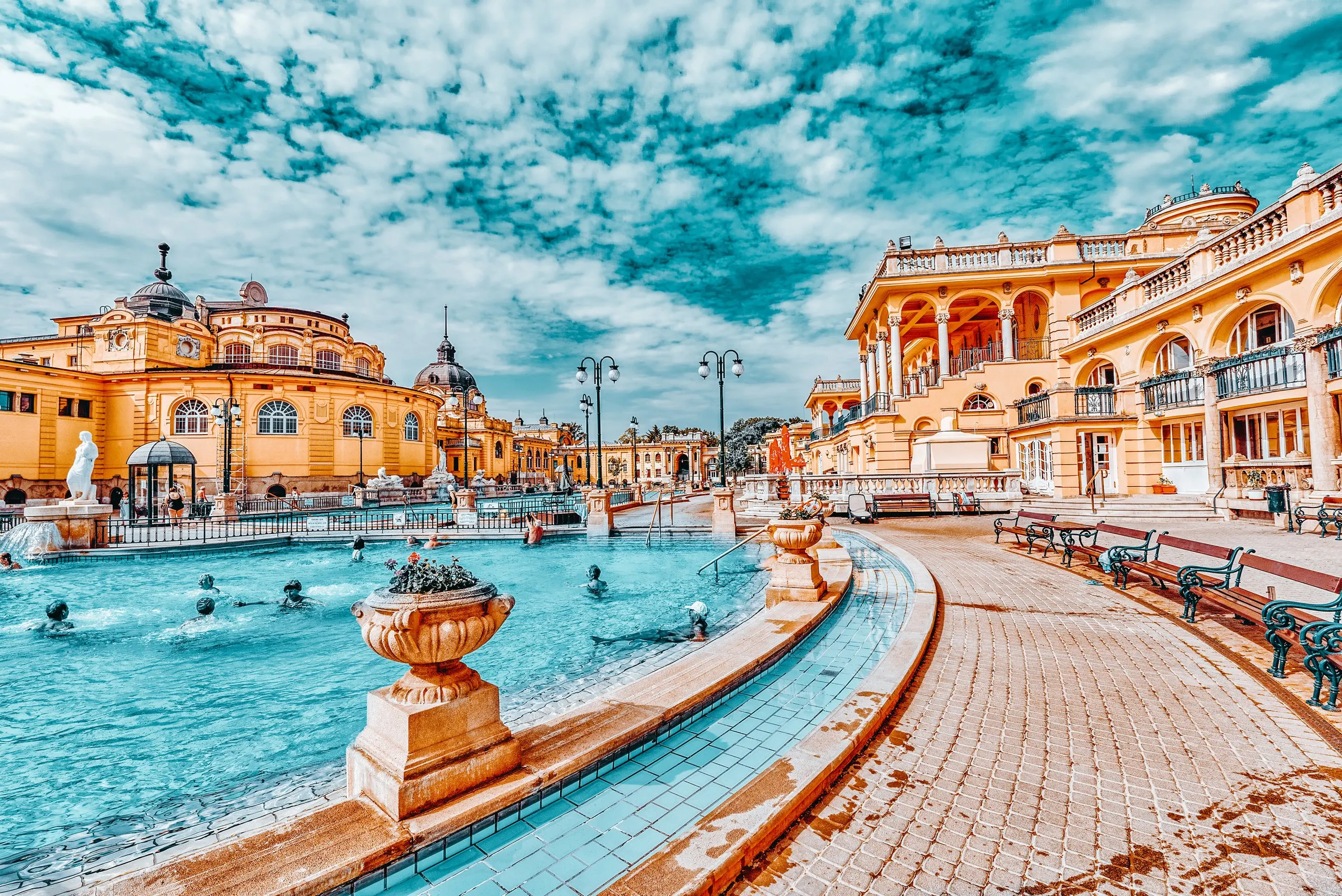
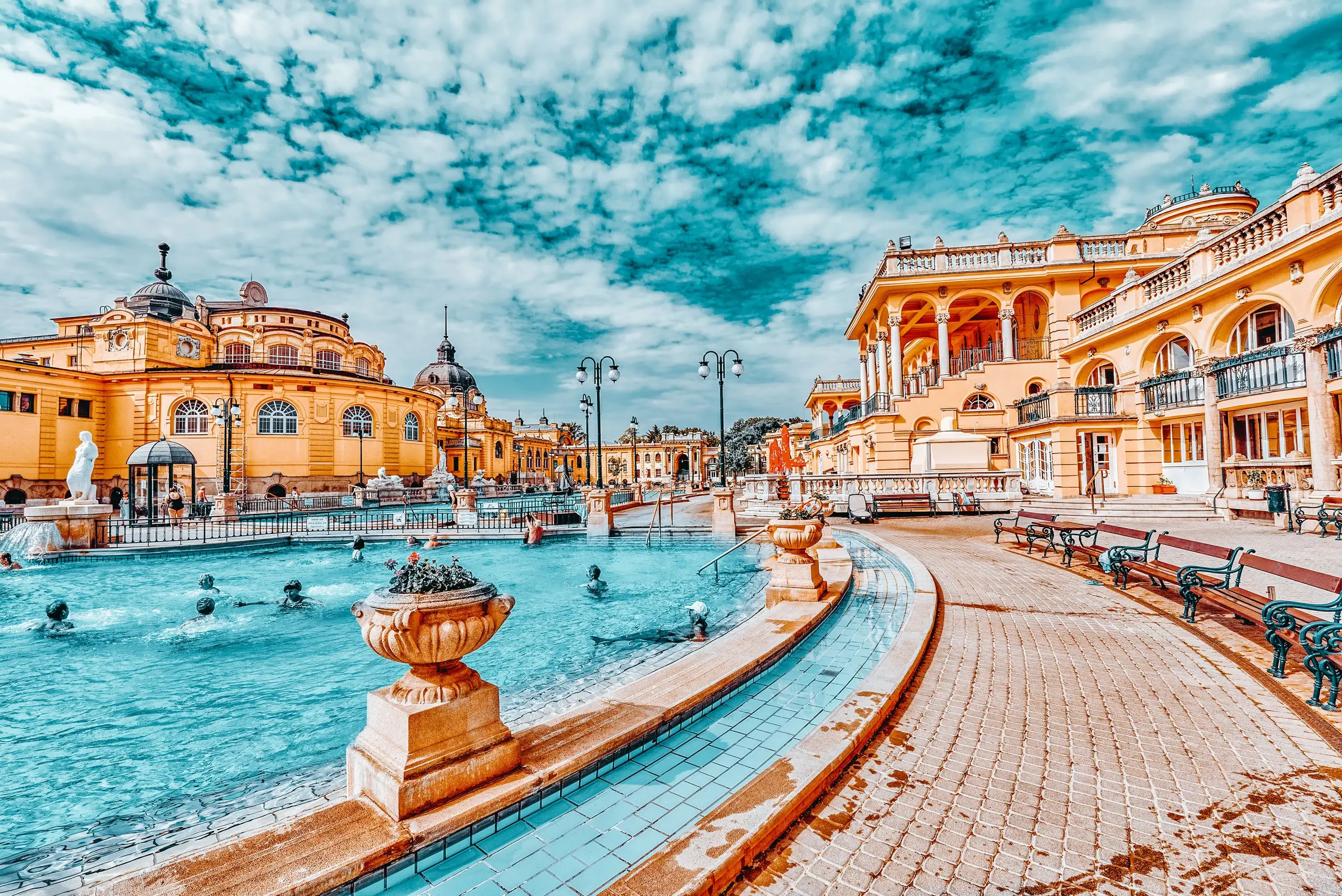
The yellow neo-baroque complex in City Park, opened in 1913 and the largest medicinal bath in Europe. The outdoor pools steaming in winter are the image everyone has seen, and they live up to it.
What visitors miss: the indoor thermal rooms are where locals actually sit. They are quieter, hotter, and considerably less crowded than the outdoor pools at any hour.
Biggest in every sense, which also means the busiest. Weekday mornings are noticeably calmer than weekend afternoons.
Gellért
Finished in 1918, and the reason to come is the building: Zsolnay ceramics, mosaic, a glass roof over the main hall. It is attached to a hotel and feels it — grander, more expensive, fewer Hungarians.
Take it if Art Nouveau interests you. Skip it if you mainly want to sit in hot water, because you will pay a premium for the room you are sitting in.
Rudas
The Ottoman one, and the most atmospheric by a distance. The octagonal thermal pool under the dome dates from the 1560s, and the light coming through the coloured glass in the roof is genuinely worth seeing.
Check the schedule before you go. The historic Turkish section runs single-sex on some weekdays and mixed at weekends, and the arrangement changes. The rooftop pool is a separate, more modern addition with a view over the river.
Lukács
Plainer, cheaper, and covered in marble plaques left by people thanking the water for curing them — which tells you who goes. This is the bath Budapest uses.
No spectacle, no photograph you will post. A good bath.
How the system works
The part that saves you a bad afternoon:
- Choose cabin or locker when you buy. A cabin is a private changing room; a locker is a locker. For two people a cabin is usually worth the difference.
- The wristband is your key. It opens your cabin or locker and is how you pay for anything inside.
- Thermal pools are for sitting in, not swimming. The hot ones run 38–40°C. Twenty minutes and then cool down — that is the rhythm, not an endurance test.
- Flip-flops. The floors are wet stone and everybody is barefoot.
- Prices vary by bath, by weekday versus weekend, and by whether you book online. Check the bath’s own site the week you go; printed figures go stale fast.
Can you visit more than one in a day?
You can, and it is a waste. One bath, unhurried, with time to sit and cool down and sit again, beats two rushed. If you want to see several, walk between them and go in to one — which is what our thermal baths tour does.
Related tours

Would you rather someone local showed you?
Every tour we run is private, and the price is for the group.